Blog
Articles about dental radiology, DICOM, 3D imaging technology, and best practices for your clinic.
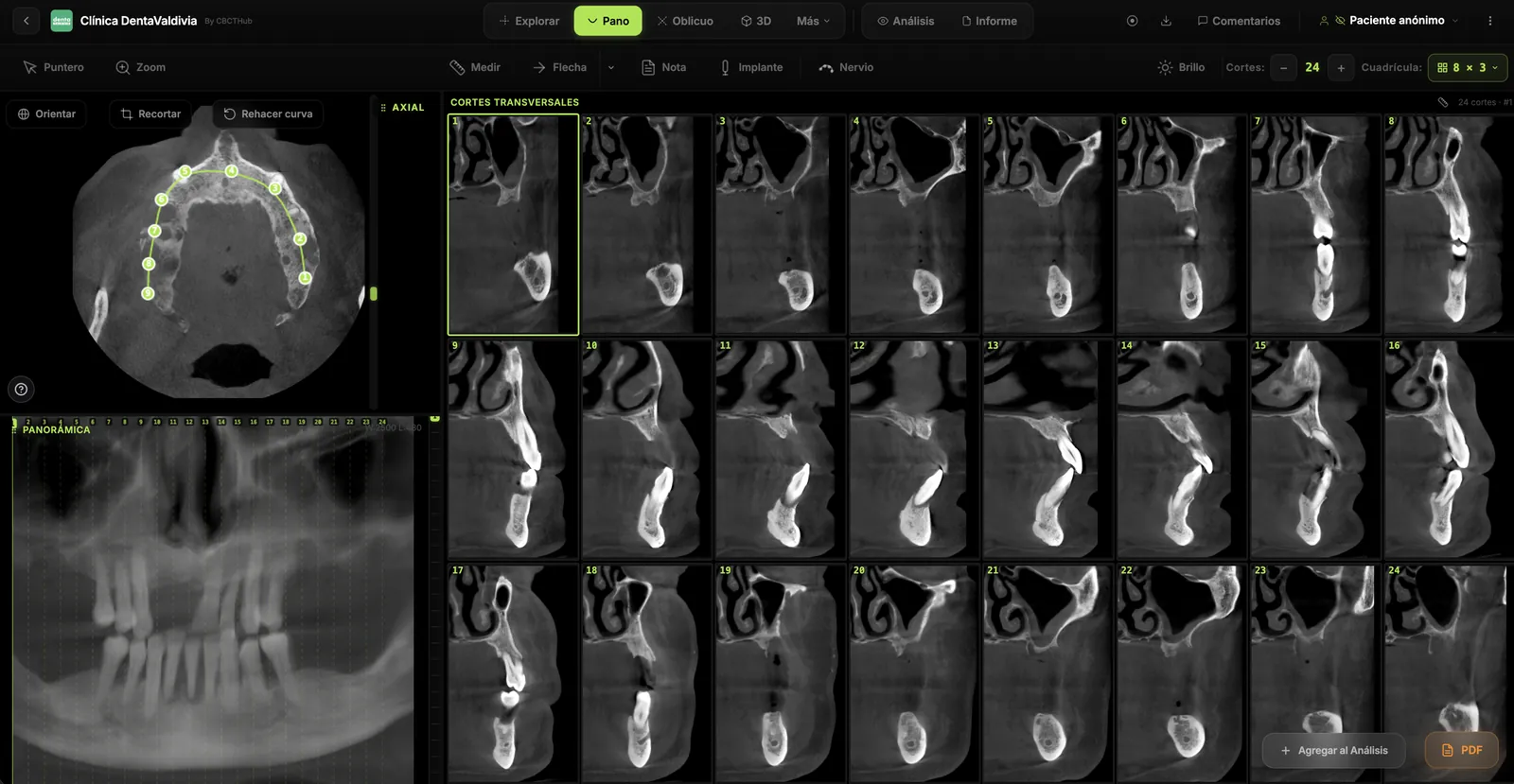
Endodontic CBCT: AAE/AAOMR 2025 indications
When to justify CBCT in endodontics per the AAE/AAOMR 2025 Position Statement: selective use, limited FOV, ALADAIP, and a practical reading checklist.
Dental CBCT in the cloud: day-to-day storage and sharing in clinic
What “CBCT in the cloud” means in clinic: store the original DICOM, access it from multiple chairs, and share with access control — without mistaking it for a full PACS or a WhatsApp ZIP.
Browser DICOM viewer vs desktop: what works for CBCT in clinic
Open CBCT in the browser or install a desktop viewer? A clinical decision matrix: MPR performance, offline use, Mac/Windows mix, sharing without CDs, and when native software still wins.
Dental DICOM software: a checklist for choosing a CBCT viewer
Before adopting a dental DICOM or CBCT viewer in the clinic: checklist for interoperability, MPR, mm measurements, share without CD, privacy, and TCO.
How to open a CBCT without installing software: a practical online-viewer guide
You got a CD, ZIP, or link with a CBCT and no manufacturer viewer. How to open the DICOM in the browser, measure in mm, and what to do when it fails.
Online CBCT viewer: what it is and when to use it in clinic
What an online CBCT viewer is, when to use it vs desktop or CD, DICOM tools (MPR, measurements, share link) and basic privacy in clinic.
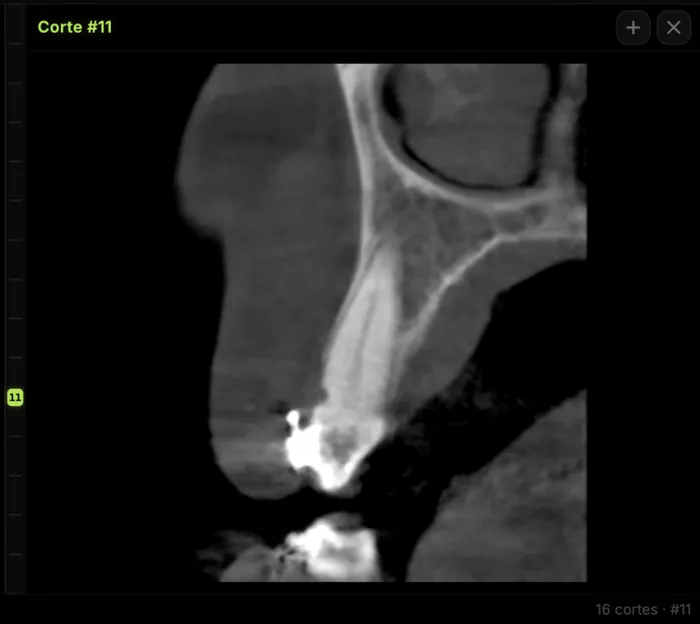
Mandibular canal and inferior alveolar nerve on CBCT: anatomy, variants, and pre-surgical measurement
Locate the mandibular canal and IAN on CBCT: mental loop, bifid/retromolar canal, measurement checklist, and when to escalate from panoramic (ALADA).
Best CBCT Viewers 2026: Complete Comparison of 10 Dental Imaging Software Options
In-depth comparison of the best CBCT viewers for dental imaging in 2026. Cloud-based and desktop options, pricing, features, and best-fit scenarios.
Your Logo on Every CBCT: Why Your Brand Matters More Than You Think
Patients remember the dentist, not the imaging center. But if your brand shows up every time the dentist opens the scan, you become indispensable.
How Much It Really Costs to Burn a CD to Deliver a CBCT Scan
A full TCO breakdown of CD-based CBCT delivery: consumables, staff time, patient callbacks, and redeliveries. The real numbers per study.
5 Metrics Every Dental Imaging Center Should Track Every Month
Volume by modality, redelivery rate, delivery time, referring dentist NPS, and cost per study. How to measure each one without complex software.
Text, Email, or Link: A Real Comparison of 4 Ways to Deliver a CBCT Scan
CD/USB, text message with file, email attachment, and platform link. Cost, security, experience, and scalability of each.
How to Onboard a New Referring Dentist in Under 10 Minutes
A step-by-step workflow: what to ask for, how to present your platform, and a text message template for the first contact.
Data Privacy Compliance for Dental Imaging Centers: HIPAA, UK GDPR, PIPEDA
What applies in the US, UK, and Canada, which documents you need, and the real risks of failing to protect patient data.
How to Measure Your CBCT Image Quality: A Technical Checklist for Your Team
Voxel size, FOV, contrast, noise, and artifacts. How to audit your center's image quality every month without expensive equipment.
Why Dentists Choose One Imaging Center Over Another (and What CDs Have to Do With It)
Three factors decide the referral: image quality confidence, delivery time, and ease of use. CDs are the most underestimated source of friction in the industry.
How to Attract More Referring Dentists Without Spending on Ads
The secret is the delivery experience. Dentists talk to each other — if your workflow is smooth, they recommend you.
CBCT Pricing Benchmark 2026: How to Position Your Center Without a Price War
Typical price ranges, bundling models with radiology reports, and why competing on service beats competing on price.

Patient data protection in Chile: Law 19.628 and the new Law 21.719 for dental imaging centers
Complete guide to Chile's current Law 19.628, the new Law 21.719 effective December 2026, and Law 20.584 on patient rights. How CBCTHub helps you comply today and tomorrow.

Patient data protection in Argentina: Law 25.326 and Law 26.529 compliance guide for dental imaging centers
How to comply with Argentina's Law 25.326 (Habeas Data), Law 26.529 on patient rights, AAIP, and the EU adequacy decision at a dental clinic. How CBCTHub helps.

Patient data protection in Mexico: LFPDPPP, INAI, and NOM-024 compliance guide for dental imaging centers
How to comply with Mexico's LFPDPPP, its regulation, NOM-024-SSA3-2012, and NOM-004 at a dental imaging clinic. INAI, Privacy Notice, UMA-based fines. How CBCTHub helps.

Patient data protection in the USA: HIPAA and HITECH compliance guide for dental imaging centers
How to comply with HIPAA (Public Law 104-191), Privacy Rule, Security Rule, and HITECH Act in a dental imaging clinic. PHI, BAA, OCR fines up to USD 1.5M per year.

Patient data protection in Spain: LOPDGDD 3/2018 and GDPR compliance for dental imaging centers
How a dental imaging center complies with Spain's LOPDGDD 3/2018, EU GDPR, and Law 41/2002 on clinical records. Obligations, penalties up to EUR 20M, and how CBCTHub helps.
Migrating from on-premise dental PACS to cloud: a phased approach with the CBCTHub API
On-premise dental PACS quietly burn $30K+ per year in hardware, backups and IT. Here is a four-phase plan to migrate to the cloud without any downtime.
HIPAA-compliant dental imaging APIs: security checklist for US healthcare integrations
A 10-point HIPAA security checklist for any dental imaging API integration in the US. Encryption, BAAs, audit logs, breach notification, patient rights.
Automating CBCT delivery: from scanner to referring dentist's inbox in under 60 seconds
Burning CDs and emailing 800 MB ZIPs takes hours. With an automated CBCT pipeline you ship every scan in under a minute and free up half a shift per day.
Webhooks vs polling: building real-time exam notifications for dental imaging workflows
Polling every 30 seconds wastes cloud spend and drains mobile batteries. Here is how to build real-time CBCT notifications with HMAC-signed webhooks instead.
How to integrate your dental practice management software with CBCTHub: a complete API tutorial
Step-by-step guide to integrating a dental PMS with the CBCTHub REST API. Upload exams, embed the 3D viewer, and automate delivery in Node, Python and PHP.
Mac vs PC for opening CBCT: what to consider before buying
You need to buy a computer for your clinic or imaging center and are torn between Mac and PC. Real criteria for CBCT, no marketing.
How to choose a dental PACS for your clinic or imaging center
A practical checklist of the 10 criteria that matter when choosing a dental PACS: price, storage, viewer, integrations, support, compliance and more.

iPad for dental radiology: which model is best in 2026
You want to use iPad to review CBCT scans with patient or referrer. Which model fits best? Honest guide based on real clinical use.
Use cases of a dental PACS: implants, endo, ortho and TMJ
A dental PACS is not just "storing tomographies". We show how it is used in implantology, endodontics, orthodontics, surgery, TMJ and pediatric dentistry with concrete examples.
How to migrate from CD to cloud without losing old scans
You have years of CBCT scans on CDs and external drives. Here is a step-by-step plan to migrate to cloud without losing a single one.

Free DICOM viewer: 7 options compared in 2026
You need to open a DICOM and do not want to pay. Here are the 7 best free options in 2026, with strengths and real limitations.
OnDemand3D vs Romexis vs CBCTHub: an honest comparison
Three CBCT software with different audiences. An honest comparison of strengths, weaknesses and when to pick each.
Cloud dental PACS vs local server: a practical comparison
Cloud or server in your clinic? We compare cost, maintenance, security and performance of a cloud dental PACS versus an on-premise one.
How much each CD you hand out really costs (TCO calculation)
A CD looks free but it costs more than digital delivery. Here is the full TCO calculation for a CD, with real numbers from imaging centers.
Turn your imaging center into a brand: step-by-step branding guide
Your dental imaging center is not a commodity. It is a brand with value. Concrete steps to build professional branding without an agency.
Dental RIS vs PACS: differences and which one your clinic needs
Do you know the difference between a RIS and a PACS? We explain each one, what each system does well, and which is the best option for a dental clinic or imaging center.
Digital scan delivery improves your Google Reviews rating
Reviews that mention speed and convenience are the ones that drive conversions. Here is how digital delivery of CBCT scans directly impacts your Google rating.
How to land 10 new referring dentists in 90 days
Landing referring dentists is not mass marketing. It is one-to-one prospecting with a clear process. A 90-day plan to add 10 active referrers.
What is RIS/PACS and how does it apply to dentistry?
RIS and PACS are the backbone of digital radiology in hospitals. Here is what they are, how they work, and why more and more dental clinics are adopting them.
How much to charge for a CBCT scan in 2026: pricing benchmarks for the US and UK
Pricing a CBCT scan is not just looking at the clinic next door. Here is a market benchmark and how to calculate your real price based on cost and positioning.
Bone density in CBCT: Misch and Lekholm-Zarb explained with examples
The Misch and Lekholm-Zarb classifications are still the common language in implant dentistry. How to apply them when reading a CBCT scan, without confusing D1 with Type 1.
CBCT radiation dose: how to explain it to a patient in 30 seconds
When a patient asks how much radiation a CBCT scan delivers, you have 30 seconds before you lose their trust. Here is a clear script with real numbers.
Reading CBCT artifacts: the 5 most common patterns and what causes them
A practical field guide to CBCT artifacts — beam hardening, motion, scatter, ring and aliasing — with how to recognize each and when to re-acquire.
How to open DICOM files on a Mac without installing OsiriX
A step-by-step guide for dentists, radiologists and anyone who received a DICOM folder and needs to view it on macOS — no installs, no license keys.
CBCT viewer comparison 2026: 8 options tested side by side
Romexis, CS 3D Imaging, Invivo, OsiriX, Horos, RadiAnt, CBCTHub and OnDemand3D compared across speed, cost, compatibility, sharing and platform support.
A practical guide to CBCT radiation dose in 2026
How much radiation does a dental CBCT really deliver, how does it compare to other imaging, and what can you do at the scanner to reduce it without losing diagnostic value.
The end of CDs in dentistry: how to share CBCT scans in 2026
Burning CBCT studies to CD is a 2010 workflow that still runs in 2026. Here is why it persists, why it costs you, and the three things to replace it with.
CBCT for dental implant planning: a step-by-step guide
From scan acquisition to surgical guide, a practical walkthrough of how to use CBCT for implant planning in general practice in 2026.
HIPAA-compliant CBCT viewers: what to look for and what the acronyms mean
A plain-English breakdown of what HIPAA requires from a CBCT viewer vendor in 2026, and the non-negotiable features to verify before picking one.
CBCT vs medical CT: when each is the right tool in dentistry
How cone beam CT and multi-slice medical CT differ in dose, resolution and clinical use — and when to pick one over the other in a dental or maxillofacial context.
A dental radiologist's 2026 workflow: from acquisition to shared report
How a modern dental radiology practice runs from patient arrival to report delivery — with the tooling that replaced CDs, paper reports and shared Windows workstations.
Endodontic CBCT: when small-FOV imaging changes the outcome
Small-FOV, high-resolution CBCT is transformative in endodontics — but only in the right cases. A clinical guide to when it earns the dose.

What Is CBCT and Why Every Dental Practice Needs It
Learn how cone beam computed tomography revolutionizes dental imaging and diagnosis. Discover why CBCT is essential for modern dental practices.
How to Read a CBCT Scan: A Beginner's Guide for Dentists
New to CBCT interpretation? Learn how to navigate axial, sagittal, and coronal views, identify key anatomical landmarks, and avoid common reading mistakes.
CBCT for TMJ Disorders: Diagnosis and Treatment Planning
Learn how cone beam CT helps diagnose temporomandibular joint disorders, evaluate condylar morphology, and plan treatment for TMD patients.
Online DICOM Viewer vs Desktop Software: Which Is Better?
Compare cloud-based and desktop DICOM viewers. Understand the pros and cons of each approach for your dental imaging workflow.
CBCT for Endodontics: How 3D Imaging Improves Root Canal Diagnosis
Discover how CBCT imaging helps endodontists detect missed canals, vertical root fractures, and periapical pathology that 2D radiographs miss.

CBCT Airway Analysis: How Dentists Screen for Sleep Apnea
Discover how CBCT imaging helps dentists measure upper airway volume, identify obstructions, and collaborate with sleep medicine specialists.
How to Share CBCT Scans with Patients and Referring Dentists
Discover best practices for securely sharing dental imaging with patients and colleagues. Learn how digital workflows streamline communication.

CBCT in Orthodontics: 3D Imaging for Better Treatment Planning
Learn how orthodontists use CBCT to assess impacted teeth, airway analysis, bone boundaries, and skeletal relationships for precise treatment planning.

Pediatric CBCT Imaging: When Is It Safe and Necessary for Children?
A guide for pediatric dentists on CBCT indications in children, radiation safety, dose reduction protocols, and clinical applications from impacted teeth to airway assessment.
Complete Guide to the DICOM Format for Dental Professionals
Master the DICOM format: understand its structure, metadata, and how it revolutionized medical imaging standards.
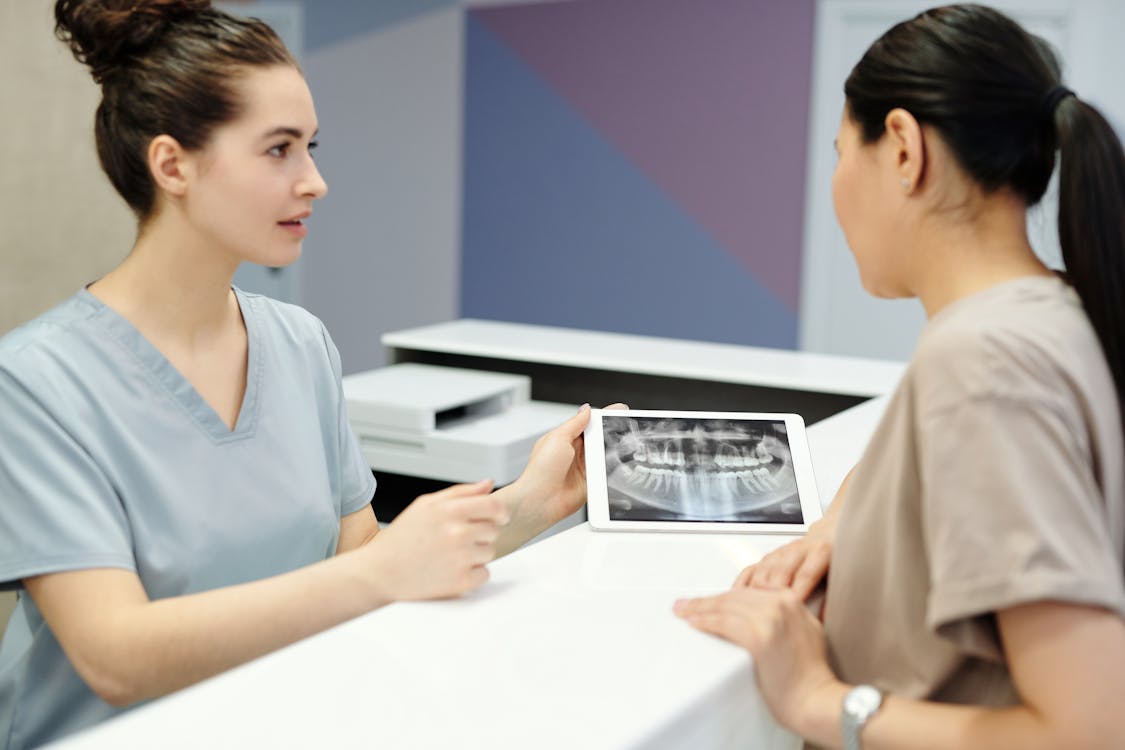
Using CBCT for Third Molar Extraction Planning
How CBCT imaging helps oral surgeons assess nerve proximity, root morphology, and surgical approach before wisdom tooth extraction.

5 Common Mistakes When Managing Dental Imaging Files
Avoid costly errors in dental imaging management. Learn best practices for organizing, storing, and securing DICOM files.

CBCT-Guided Implant Surgery: From Digital Planning to Surgical Guides
A complete workflow guide for planning dental implants with CBCT, creating surgical guides, and achieving predictable flapless placement.

CBCT Radiation Dose in Dentistry: What Patients and Clinicians Should Know
Understand CBCT radiation doses, how they compare to medical CT and conventional dental radiographs, and how to follow ALARA principles in your practice.
CBCT vs Panoramic Radiograph: When to Use Each
Understand the clinical differences between CBCT and panoramic imaging. Learn when to prescribe each modality for optimal diagnosis.
CBCT for Sinus Lift Planning: Pre-Surgical Assessment Guide
How CBCT imaging helps plan maxillary sinus augmentation procedures by measuring residual bone, identifying septa, and mapping arterial anatomy.
How to Export DICOM Files from Carestream CBCT Scanners
Step-by-step guide for exporting DICOM files from Carestream CS 8100 3D, CS 9300, and CS 9600 scanners for viewing in third-party DICOM viewers.
CBCT in Dental Trauma: Detecting Root Fractures and Luxation Injuries
Why 3D imaging is critical for trauma diagnosis — how CBCT reveals root fractures, alveolar bone damage, and luxation patterns that 2D radiographs miss.
How to Choose the Right CBCT Viewer for Your Clinic
Essential criteria for selecting CBCT viewer software. Find the perfect solution for your clinical needs and workflow.

Exporting and Viewing DICOM from Planmeca Romexis
Guide for dental professionals using Planmeca ProMax 3D scanners: how to export DICOM files from Romexis and view them in any DICOM viewer.
Cloud Storage for Dental Images: Security and Compliance
Secure your dental imaging data in the cloud. Learn HIPAA requirements and best practices for cloud-based image storage.
HIPAA Compliance for Dental Imaging: What You Need to Know
A practical guide to HIPAA requirements when storing, sharing, and transmitting dental CBCT scans and DICOM files electronically.
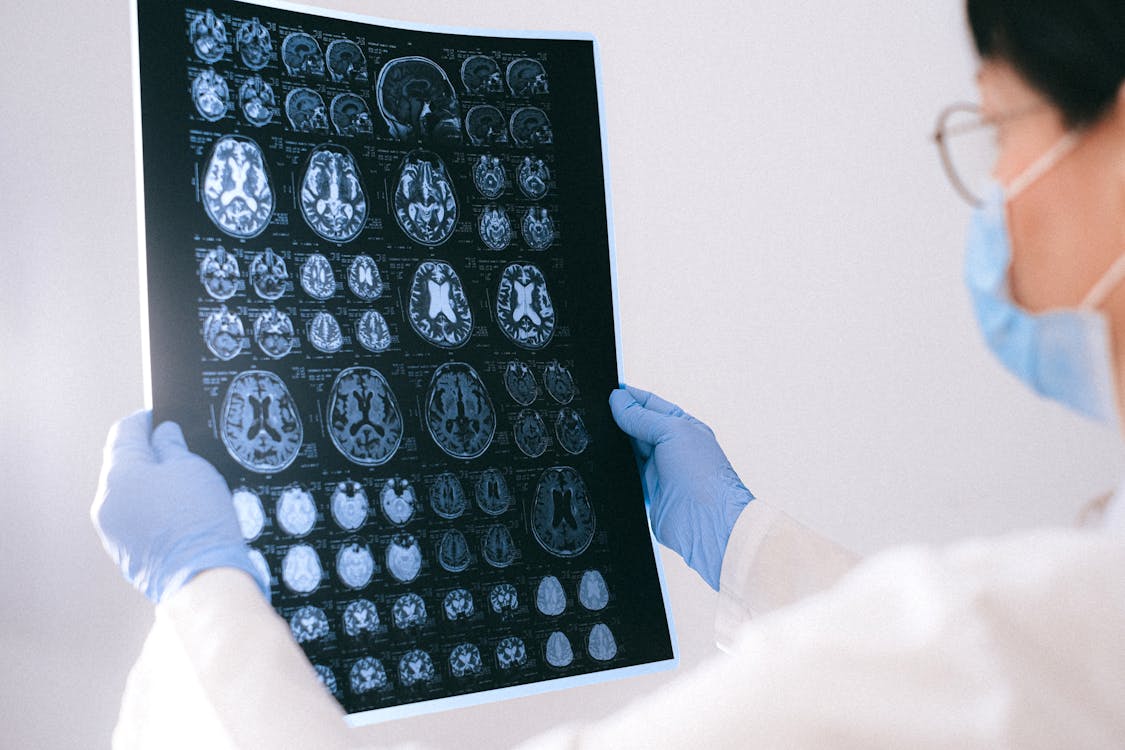
CBCT Artifacts Explained: Types, Causes, and How to Fix Them
A practical guide to understanding and minimizing common CBCT artifacts including beam hardening, scatter, motion blur, and metal artifacts.
Evaluating the Maxillary Sinus on CBCT: A Clinical Guide
How to assess sinus pathology, membrane thickness, septa, and sinus floor proximity on dental CBCT scans for implant and surgical planning.

How to Export DICOM Files from Sirona Orthophos CBCT Scanners
Step-by-step guide to exporting DICOM data from Dentsply Sirona Orthophos and Axeos CBCT units for viewing in third-party software.
Understanding MPR Views in Dental CBCT Imaging
Master multiplanar reconstruction. Learn how to interpret axial, sagittal, and coronal views in CBCT imaging.
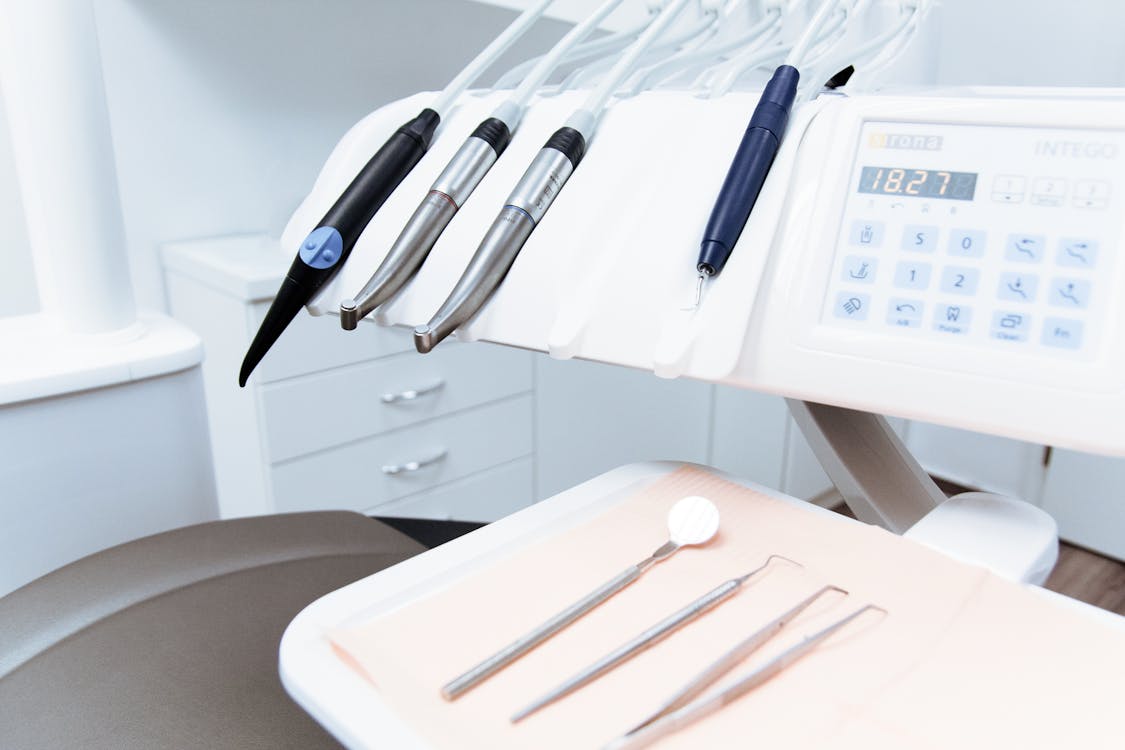
Building a Digital Workflow for Your Dental Radiology Center
From acquisition to delivery: how to create an efficient, paperless workflow for your dental imaging center using cloud DICOM tools.

How to Export DICOM Files from Morita CBCT Scanners (Accuitomo & Veraview)
Complete guide to exporting DICOM data from J. Morita 3D Accuitomo and Veraview CBCT units using i-Dixel software.
How Radiology Centers Can Deliver Exams Digitally
Transform your radiology center with digital delivery. Learn how to streamline workflows and improve referring dentist satisfaction.

Detecting Periapical Pathology with CBCT: What 2D Radiographs Miss
Research shows CBCT detects up to 35% more periapical lesions than conventional radiographs. Learn why and when to upgrade your diagnostic imaging.
Best Dental CBCT Scanners in 2026: Complete Comparison Guide
An in-depth comparison of the top dental CBCT scanners — Planmeca, Sirona, Carestream, Vatech, Morita, NewTom, and KaVo — covering FOV, resolution, dose, and features.
Real-Time Collaboration in Dental Radiology
Enable instant collaboration between radiologists, dentists, and specialists. Discover how modern platforms transform teamwork.
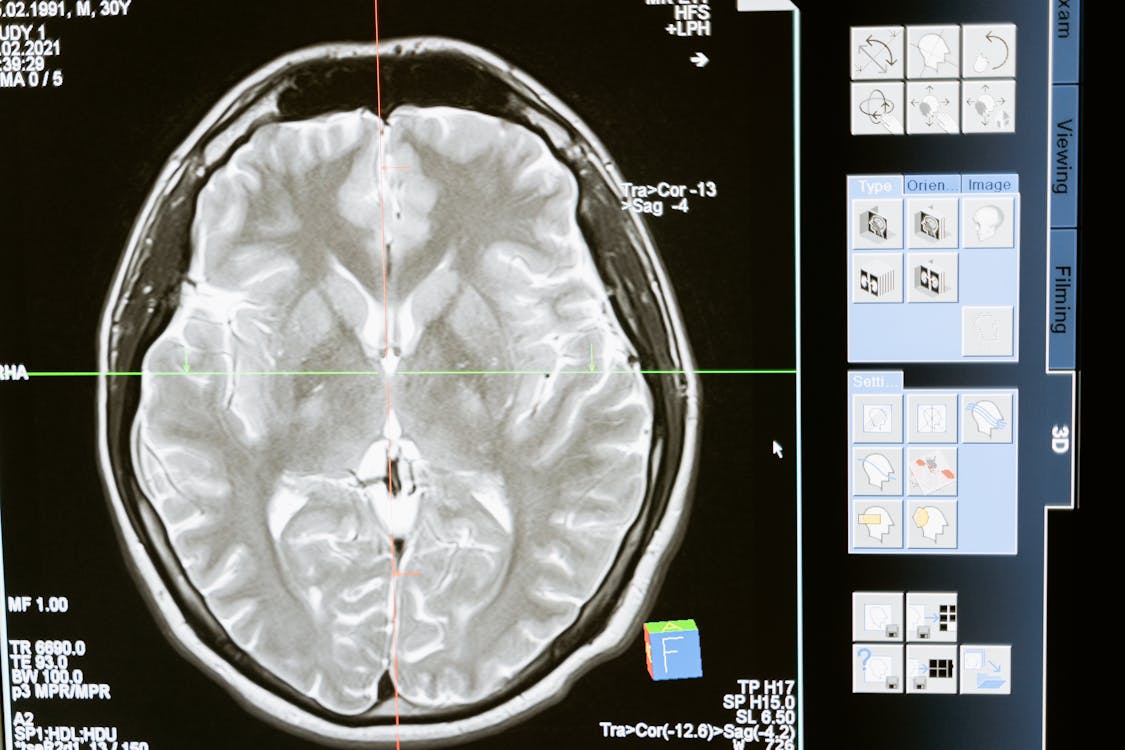
Working with Vatech CBCT Scanners: DICOM Export and Viewing Tips
How to export, share, and view DICOM files from Vatech PaX-i3D, Green CT, and PHT scanners in any standard DICOM viewer.
Browser-Based DICOM Processing: How WebAssembly Changes Everything
Discover how WebAssembly enables advanced DICOM processing in web browsers. Learn what this means for dental imaging.
CBCT Field of View (FOV) Selection: How to Choose the Right Size
A practical guide to selecting the optimal CBCT field of view for each clinical indication — from endodontics to full craniofacial imaging.

How to Create Professional PDF Reports from CBCT Findings
Learn best practices for generating radiological reports from CBCT scans, including what to include, formatting tips, and how to automate the process.
Setting Up a Dental Imaging Center: Software Essentials
Build a professional dental imaging center. Learn which software tools and systems you need for success.
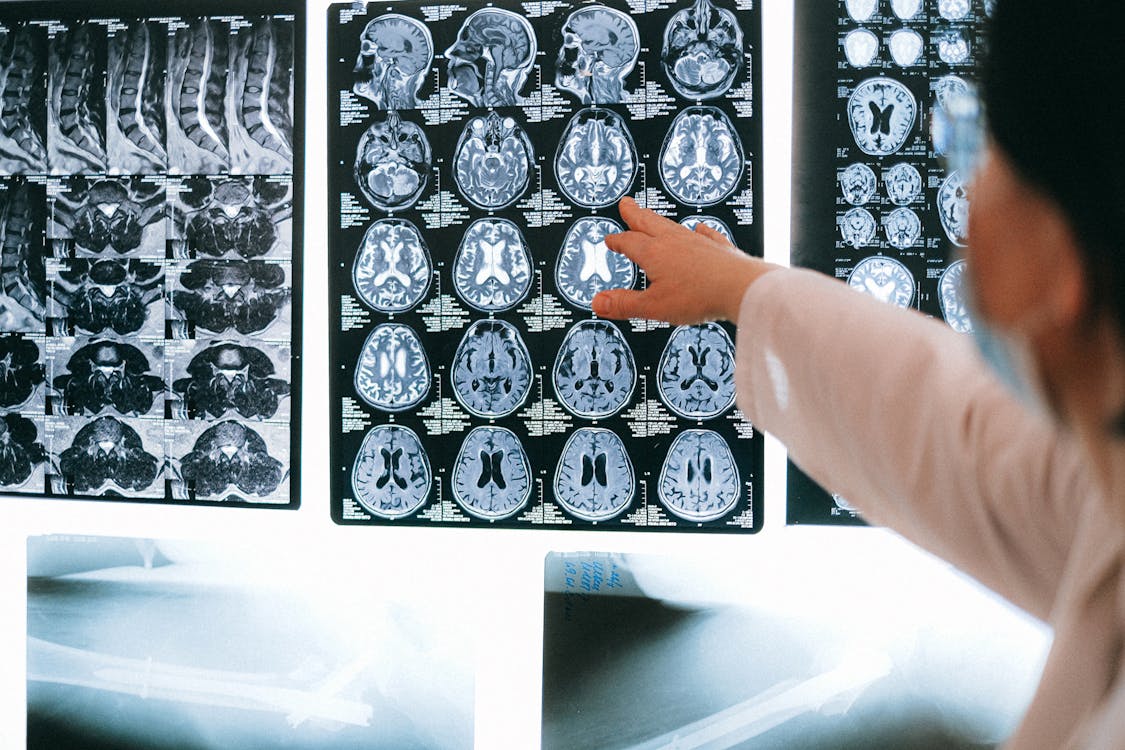
CBCT in Oral Pathology: Detecting Cysts, Tumors, and Bone Lesions
How CBCT improves diagnosis and treatment planning for odontogenic cysts, benign tumors, and other bone lesions of the jaws.
Assessing Periodontal Bone Loss with CBCT Imaging
How CBCT provides a complete 3D picture of periodontal bone loss, furcation involvement, and infrabony defect morphology for better treatment planning.
The Future of Dental Radiology: AI, Cloud, and Collaboration
Explore emerging trends shaping the future of dental radiology. Understand how AI and cloud technology will transform your practice.

Remote CBCT Interpretation: Teleradiology Services for Dental Practices
How dental practices can access expert CBCT radiology reports remotely — benefits of teleradiology, workflow integration, and choosing a reporting service.
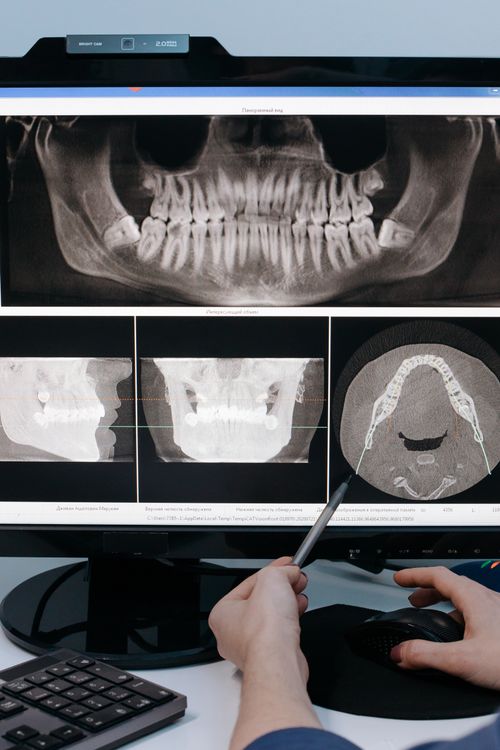
CBCT for Supernumerary and Impacted Teeth: 3D Localization Guide
How CBCT precisely localizes supernumerary teeth, ectopic canines, and other impacted teeth to guide surgical and orthodontic treatment.

CBCT for Pre-Prosthetic Assessment and Full-Mouth Rehabilitation
How CBCT imaging guides comprehensive treatment planning for full-mouth rehabilitation, overdentures, and complex prosthetic cases.