How much each CD you hand out really costs (TCO calculation)
· Updated
When you think about how much it costs to deliver a scan, you add up the blank CD and call it a day. But the real cost (Total Cost of Ownership, TCO) includes much more. When you do the math, digital delivery almost always comes out cheaper. Here is the full math with real numbers from dental imaging centers.
The visible costs of a CD
What you already know:
- Blank CD: 0.30 USD.
- Sleeve or case: 0.15 USD.
- Printed label: 0.10 USD.
- Visible total per scan: about 0.55 USD.
The invisible costs of a CD
This is where most centers get it wrong. Add:
- Burn time: 5 minutes per CD at assistant wage (8 USD/hour) = 0.66 USD.
- Packaging and handout time: 3 minutes = 0.40 USD.
- Re-delivery: 15% of patients lose or cannot open the CD. Reissuing means a reprint and new staff time: 1.20 USD average per scan.
- Support calls: 20% of patients call because it does not open. 5 minutes per call = 0.66 USD average.
- External burner amortization: 0.05 USD per scan.
- Viewer software bundled in CD (licensing): 0.50 USD.
- Physical storage of backup copies: 0.20 USD.
Invisible total: about 3.67 USD per scan.
Total cost per CD
Visible (0.55) + Invisible (3.67) = 4.22 USD per delivered CD.
If your center delivers 80 scans per month, that is 338 USD/month just in CD delivery. 4,056 USD per year.
Comparison with digital delivery
A dental cloud PACS (like CBCTHub) costs 30 to 200 USD/month depending on plan. Take the middle plan: 70 USD/month for 80 scans.
- Cost per delivered scan: 0.87 USD.
- No re-deliveries (link always available).
- No burning or packaging time.
- No "it does not open" calls.
Monthly savings: 268 USD. Annual: 3,216 USD.
Non-monetary costs that also matter
- Reputation: every patient annoyed by a non-opening CD lowers your Google rating.
- Your professionals' time: the radiologist should not be answering "how do I open the CD".
- Professional image: handing out a CD in 2026 signals a center stuck in the past.
- Environmental impact: thousands of CDs per year are plastic waste that is not recycled.
When a CD still makes sense
Honestly, few cases:
- Senior patients without a smartphone (very rare in 2026).
- Referrals to centers that still require CD (decreasing).
- Long-term physical backup (external drive is better).
Even in those cases, offering both makes sense: digital link by default, CD on request.
How to migrate
- Calculate your current CD TCO per scan.
- Quote a dental cloud PACS plan for your volume.
- Notify referrers of the new flow 1 month in advance.
- For 3 months offer both in parallel.
- From month 4 charge CDs as an add-on (5-10 USD) to discourage them.
How CBCTHub helps
CBCTHub completely removes the CD chain: you upload the scan, generate a branded link, send by email or WhatsApp and the patient or referrer opens it on any device. Pro plan covers most small centers. You can see plans or create a free account to calculate your savings.
Wrap up
A CD is not free. It costs between 3 and 5 USD per scan when you add everything. Migrating to digital pays for the service in the first month and frees up team time for revenue-generating tasks. The question is not whether to migrate, but when.
Try CBCTHub for free
Upload, view, and share DICOM scans in the cloud. Nothing to install.
Create free accountRelated articles
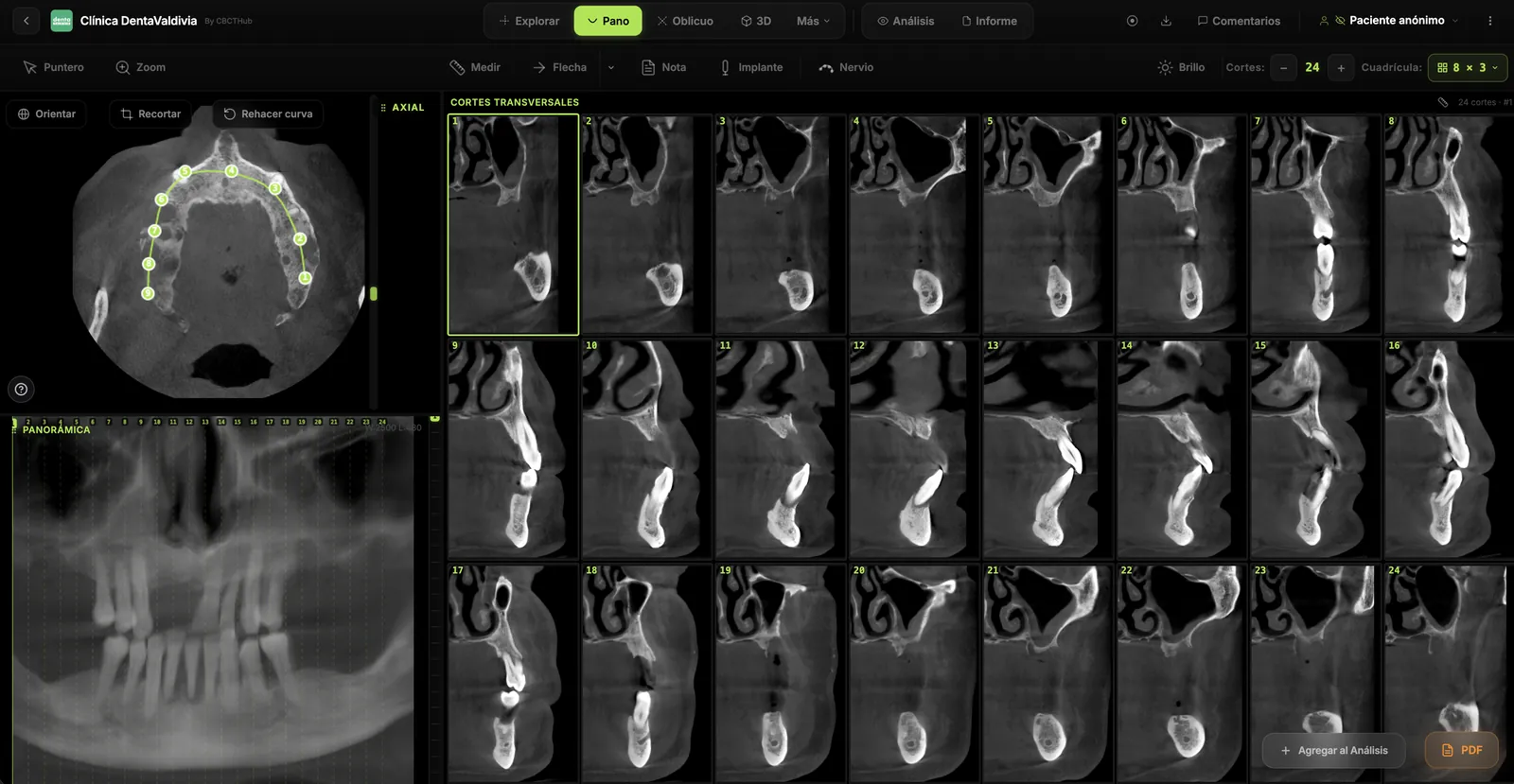
Browser DICOM viewer vs desktop: what works for CBCT in clinic
Open CBCT in the browser or install a desktop viewer? A clinical decision matrix: MPR performance, offline use, Mac/Windows mix, sharing without CDs, and when native software still wins.
How to open a CBCT without installing software: a practical online-viewer guide
You got a CD, ZIP, or link with a CBCT and no manufacturer viewer. How to open the DICOM in the browser, measure in mm, and what to do when it fails.
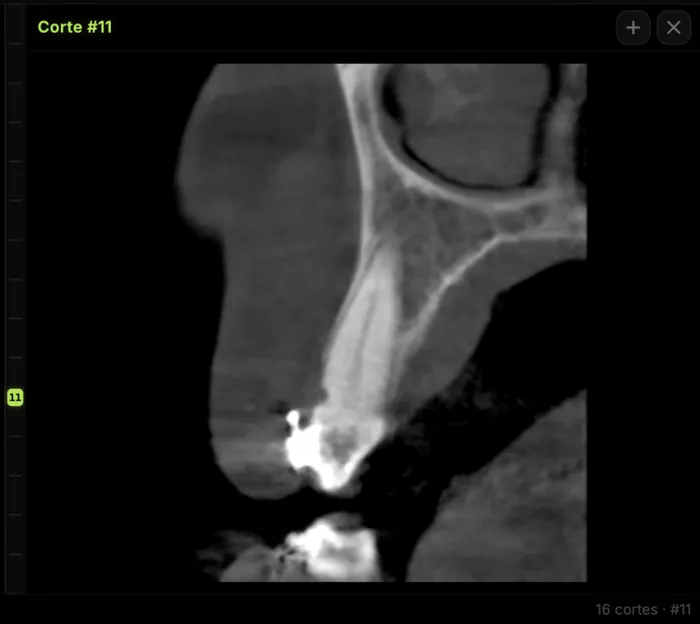
Mandibular canal and inferior alveolar nerve on CBCT: anatomy, variants, and pre-surgical measurement
Locate the mandibular canal and IAN on CBCT: mental loop, bifid/retromolar canal, measurement checklist, and when to escalate from panoramic (ALADA).