Setting Up a Dental Imaging Center: Software Essentials

· Updated
Planning Your Dental Imaging Center
Establishing a successful dental imaging center requires careful planning and selection of appropriate technology. Whether you're starting a new center or expanding existing capabilities, understanding software essentials ensures efficient operations and quality outcomes.
Core System Architecture
PACS (Picture Archiving and Communication System): This is the backbone of any imaging center. A PACS system stores all imaging studies, enables efficient retrieval, maintains data integrity, and integrates with other systems. Enterprise PACS solutions like Agfa PACS, GE HealthCare PACS, or Philips IntelliSpace handle high-volume imaging centers, while smaller centers might use mid-market solutions or cloud-based alternatives.
RIS (Radiology Information System): The RIS manages administrative and operational workflows—patient scheduling, order entry, technologist assignments, report generation, and billing. Integration between RIS and PACS is essential for seamless workflow.
Imaging Viewer Software: Desktop workstations typically use dedicated DICOM viewers for detailed analysis. Popular options include Horos (free, open-source), Osirix (commercial, popular in dental radiology), and vendor-specific solutions. These provide advanced measurement, 3D reconstruction, and quality assurance tools.
Modality-Specific Software
Different imaging modalities require specific software drivers and integrations:
CBCT Equipment: CBCT scanners include manufacturer-provided software for image reconstruction and preliminary viewing. However, integrating reconstructed DICOM files into your broader imaging center workflow requires PACS integration and reader software.
Digital Radiography Systems: Intraoral and extraoral digital radiography systems provide DICOM export capabilities. Ensure your PACS can receive and organize these images alongside other modalities.
Image Enhancement Software: Optional advanced software enables post-processing—artifact reduction, image enhancement, and specialized views. Decide whether to integrate this as a standard step or offer it for specific cases.
Quality Assurance and Dose Management
Dose Monitoring Software: Radiation safety regulations require dose tracking and optimization. Implement software that monitors and records radiation doses for all studies, tracks dose trends, and alerts when doses exceed expected ranges.
Image Quality QA Tools: Systematic quality assurance procedures prevent system degradation. Quality QA software enables regular testing of imaging equipment performance, tracking metrics like uniformity, noise, and artifact levels.
Auditing Software: Maintain detailed logs of system usage, user access, and imaging protocols. This creates compliance records and enables performance analysis.
Reporting and Communication Tools
Report Generation Software: Standardized reporting templates ensure consistency and completeness. Many PACS and RIS systems include report generation; specialized reporting software offers templates tailored to specific modalities and clinical questions.
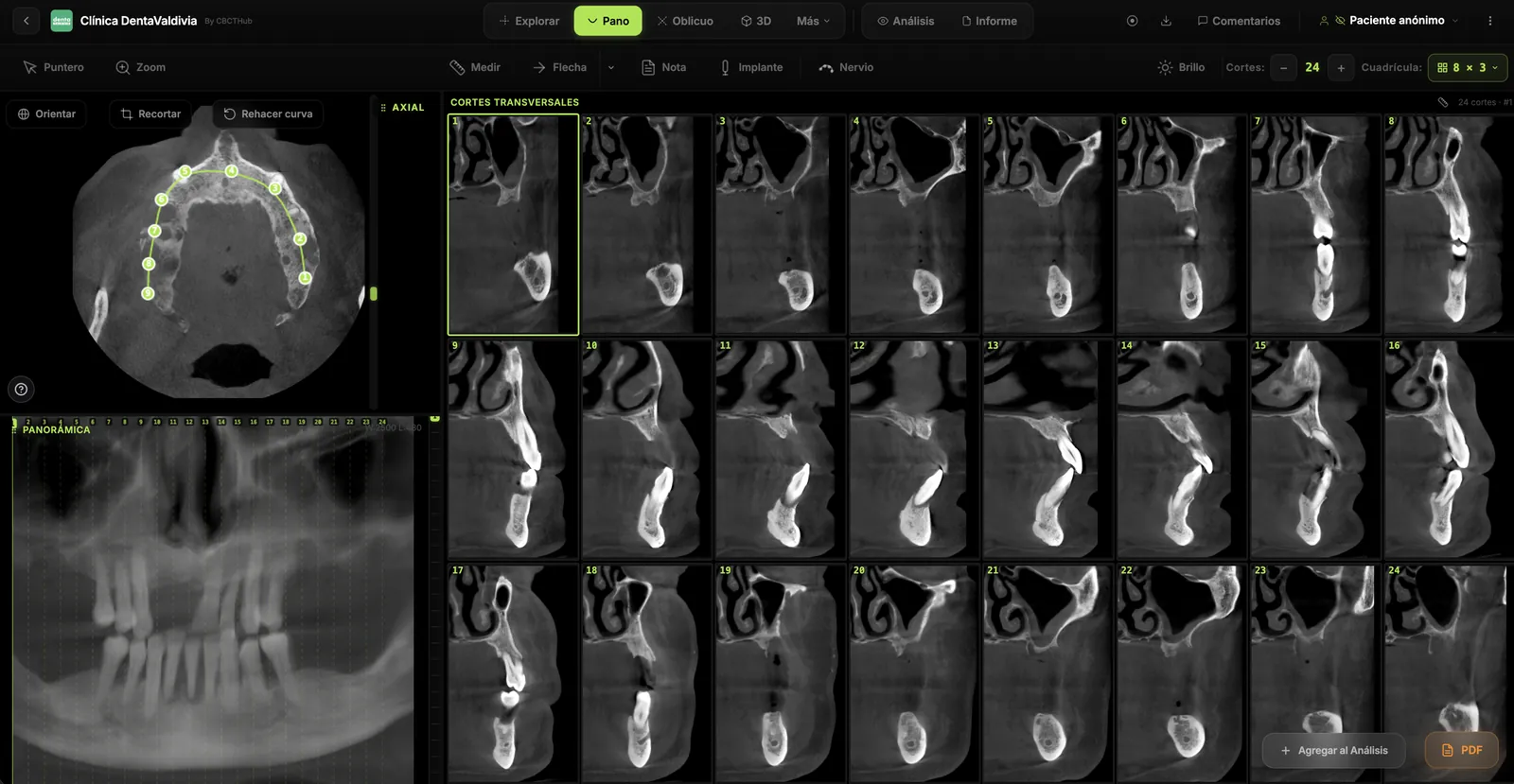
Secure Communication Platforms: Enable sharing of reports and imaging with referring dentists and patients. Solutions like CBCTHub provide secure access to imaging and reports through patient and dentist portals.
Integration with Practice Management: Many referring dentists use specific practice management software. Integration—either direct or through standard interfaces—streamlines referral workflows and reduces administrative burden.
Workflow Management and Scheduling
Appointment Scheduling: Calendar software coordinating scanner availability with technologist schedules and radiologist review capacity. Many PACS or RIS systems include scheduling functionality.
Worklist Management: Automated systems directing technologists to appropriate scan protocols based on ordered exams, reducing setup time and protocol errors.
Task Tracking: Monitor progress of studies from acquisition through technologist QA to radiologist review to report generation. Identify bottlenecks and optimize workflows.
Security and Compliance Software
Access Control Systems: Role-based access controls restrict imaging access to authorized personnel. Implement strong authentication—passwords, multi-factor authentication, or biometric systems—for high-security environments.
Audit Logging: Comprehensive logging of all system access, image retrieval, and data modifications creates compliance audit trails and enables investigation of unauthorized access.
Backup and Disaster Recovery: Automated backup software ensures data redundancy across multiple locations. Regular testing of recovery procedures ensures you can restore data if needed.
Data De-identification Tools: When sharing imaging for educational, research, or legal purposes, automated de-identification tools remove or replace protected health information.
Business Intelligence and Analytics
Data analytics software provides operational insights:
- Volume Tracking: Monitor study volumes by modality, referring dentist, or time period.
- Turnaround Time Analysis: Track how quickly studies move from acquisition to report completion.
- Utilization Metrics: Analyze equipment utilization, identifying underused modalities or scheduling inefficiencies.
- Financial Analytics: Track revenue by modality and referring source, informing business decisions.
- Quality Metrics: Monitor report turnaround time, study rejection rates, and patient satisfaction.
Training and Support
Comprehensive software implementation requires proper training and ongoing support:
- Vendor-provided training for radiologists and technologists
- Detailed documentation of procedures and troubleshooting
- Dedicated IT support staff or vendor support contracts
- Regular updates and patches to maintain security and functionality
Budgeting and ROI
Quality imaging center software represents significant investment. Consider:
- Capital Costs: PACS systems, workstations, and specialized software licenses
- Implementation Costs: Installation, configuration, and staff training
- Ongoing Costs: Support contracts, maintenance, software upgrades
- Return on Investment: Improved efficiency, increased volume throughput, and premium service offerings
Scalability Considerations
Choose systems capable of growing with your center:
- Can the PACS handle your projected growth in study volume?
- Does the viewer software support new imaging modalities as you expand?
- Can reporting and communication platforms scale with additional radiologists?
- Is the infrastructure capable of supporting additional workstations and users?
Conclusion
Establishing radiology center software infrastructure requires thoughtful integration of PACS, RIS, viewer software, quality assurance tools, and communication platforms. By investing in quality systems designed for medical imaging workflows, you create an environment enabling efficient operations, superior diagnostic quality, and excellent stakeholder communication. Whether you're establishing a new center or upgrading existing systems, prioritize integration, security, and scalability to build a foundation supporting long-term success.
Try CBCTHub for free
Upload, view, and share DICOM scans in the cloud. Nothing to install.
Create free accountRelated articles
Dental CBCT in the cloud: day-to-day storage and sharing in clinic
What “CBCT in the cloud” means in clinic: store the original DICOM, access it from multiple chairs, and share with access control — without mistaking it for a full PACS or a WhatsApp ZIP.
Browser DICOM viewer vs desktop: what works for CBCT in clinic
Open CBCT in the browser or install a desktop viewer? A clinical decision matrix: MPR performance, offline use, Mac/Windows mix, sharing without CDs, and when native software still wins.
Dental DICOM software: a checklist for choosing a CBCT viewer
Before adopting a dental DICOM or CBCT viewer in the clinic: checklist for interoperability, MPR, mm measurements, share without CD, privacy, and TCO.