Cloud dental PACS vs local server: a practical comparison
· Updated

When a dental clinic decides to adopt a PACS, the first big decision is architecture: cloud server or physical server in the clinic? Each option has pros and cons. We compare them point by point so you can make the right call.
Initial cost
Local server: high. You need to buy the hardware (server of at least USD 3,000-5,000), a PACS software license (USD 8,000-20,000 depending on the vendor), redundant storage disks, a backup system, and in many cases an IT technician to install it.
Cloud: low. Most cloud dental PACS charge a monthly fee (USD 20-200 depending on the plan). No upfront payment, no hardware, no installation.
Winner for small and medium clinics: Cloud, by a lot.
Operating cost over time
Local server: the server consumes electricity 24 hours, requires maintenance (disk cleanup, updates, monitoring), and eventually gets replaced (every 5-7 years). Add the cost of the IT technician who administers it.
Cloud: monthly cost is predictable. No hardware surprises. Software updates are automatic.
Over a 5-year horizon, cloud TCO (total cost of ownership) is usually 30% to 50% lower than a local server for the average dental clinic.
Data security
Local server: security depends entirely on your clinic. Do you have a UPS? Off-site backup? Encryption at rest? Who has the rack key? A fire, theft or disk failure can wipe out years of studies.
Cloud: serious providers (AWS, Cloudflare R2, Google Cloud, Azure) have geographic redundancy, encryption in transit and at rest by default, ISO 27001/SOC 2 certifications, and automatic backups.
For a dental clinic, the cloud is significantly safer than a server in the office. The opposite is only true if your clinic has a dedicated IT department, which is almost never the case.
Remote access and mobility
Local server: by default, you only access from computers inside the local network. Configuring secure remote access (VPN, port forwarding) requires technical knowledge and increases attack surface.
Cloud: native. Access from any device with internet, any time, without configuration. Particularly useful for the dentist who wants to check an exam from their phone in the consultation.
Sharing with other professionals
Local server: sharing a study with an external specialist is cumbersome. Export the DICOM to a USB, send the file through some transfer service, and pray the recipient has a compatible viewer.
Cloud: instant. Generate a link, send it via WhatsApp or email, and the other professional opens the exam in their browser with built-in viewer.
Regulatory compliance
HIPAA in the US, GDPR in Europe, LGPD in Brazil, Chile's Law 21.719: all require technical and organizational measures to protect health data.
Local server: compliance is 100% your responsibility. Any audit will require documentation of your internal controls.
Cloud: serious providers sign DPAs (Data Processing Agreement), have compliance documentation ready, and offer specific features (access logs, link expiration, etc.) that make proving conformance easier.
Performance
Local server: inside the local network, access is very fast. But if your clinic's internet connection is slow, sharing outward is slow.
Cloud: depends on your internet connection. With a decent connection (50 Mbps or more), performance is indistinguishable from local. Modern viewers use progressive streaming: you see the slice you're looking at almost instantly, and the rest loads in the background.
Scalability
Local server: when it fills up, you need to buy more disks or a bigger server. This implies downtime and data migration.
Cloud: storage grows elastically. When you hit your plan limit, you upgrade with one click.
When does a local server make sense?
There are scenarios where local still makes sense:
- Very large hospitals with their own IT department.
- Centers with specific regulations prohibiting cloud data (rare in dentistry).
- Areas with extremely poor internet connectivity.
For 95% of dental clinics and imaging centers, cloud is the clearly superior option.
CBCTHub: 100% cloud dental PACS
CBCTHub is built cloud-native from day one. Your DICOM studies are stored on Cloudflare R2 (geographically distributed infrastructure), with encryption in transit and at rest. The 3D viewer runs in the user's browser and loads slices progressively. Sharing with a referring dentist is generating a link and sending it.
No servers to maintain, no manual updates, no surprises. See our plans or create a free account to try it.
Try CBCTHub for free
Upload, view, and share DICOM scans in the cloud. Nothing to install.
Create free accountRelated articles
Best CBCT Viewers 2026: Complete Comparison of 10 Dental Imaging Software Options
In-depth comparison of the best CBCT viewers for dental imaging in 2026. Cloud-based and desktop options, pricing, features, and best-fit scenarios.
Text, Email, or Link: A Real Comparison of 4 Ways to Deliver a CBCT Scan
CD/USB, text message with file, email attachment, and platform link. Cost, security, experience, and scalability of each.
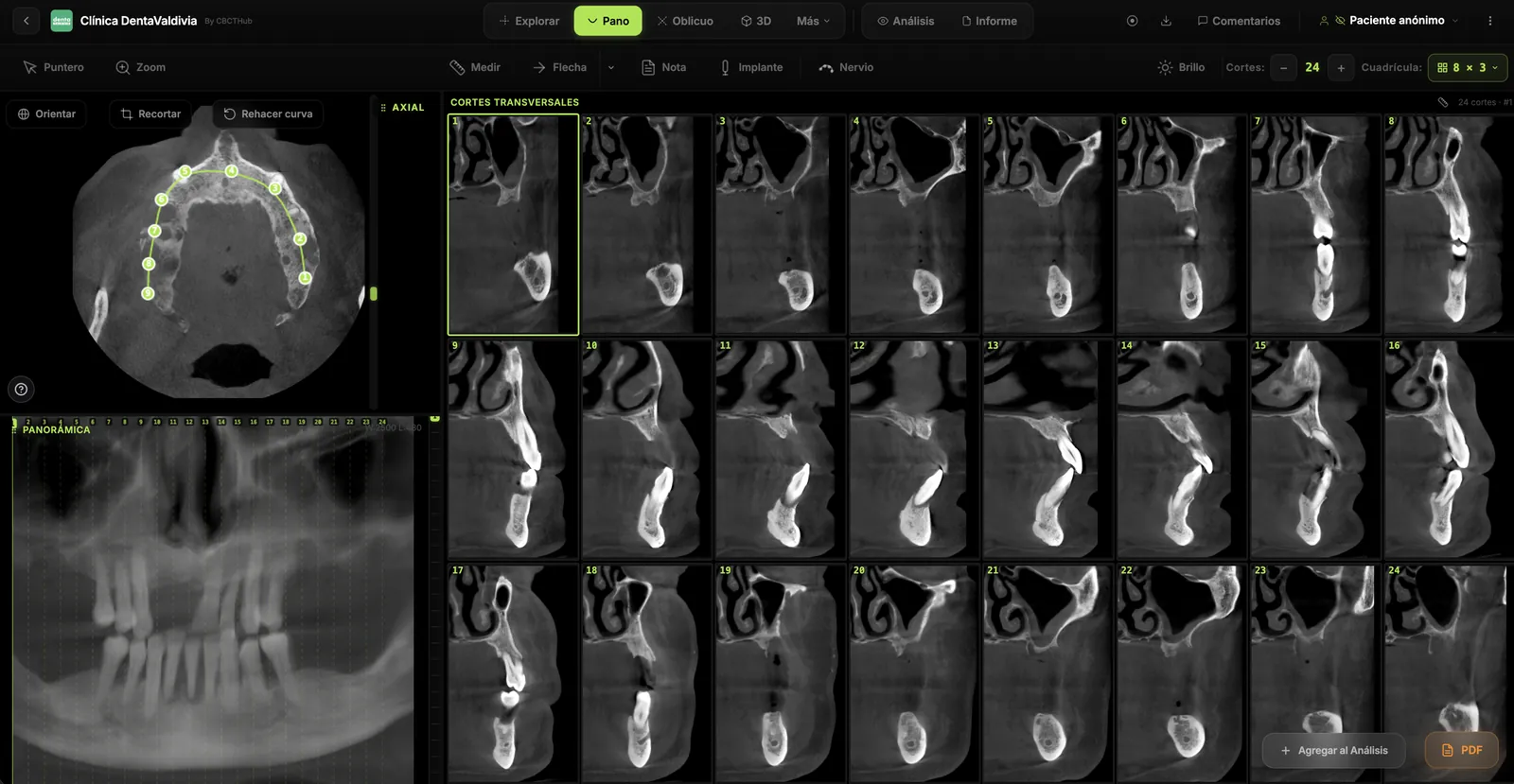
Dental CBCT in the cloud: day-to-day storage and sharing in clinic
What “CBCT in the cloud” means in clinic: store the original DICOM, access it from multiple chairs, and share with access control — without mistaking it for a full PACS or a WhatsApp ZIP.