Mac vs PC for opening CBCT: what to consider before buying
· Updated
Mac or PC for working with CBCT scans? The question divides the dental community. Truth is, both work, but with different upsides and costs. This guide helps you choose with real criteria, not brand preference.
The real criterion: what software you will run
Before talking hardware, define the software. This drives everything:
- OnDemand3D, Romexis, NemoStudio: Windows only. If you use one of these, you need a PC or a Mac with virtualized Windows.
- Horos, OsiriX: macOS only. If you use these, you need a Mac.
- 3D Slicer, Weasis: both. Pick your preferred platform.
- Cloud (CBCTHub and others): both, no difference.
PC advantages for CBCT
- More specialized dental software: almost everything serious runs only on Windows.
- Better price-performance: with 1,500 USD you have a powerful workstation.
- Dedicated GPUs more accessible: NVIDIA RTX at reasonable prices for heavy 3D render.
- More configuration options: RAM, storage, GPU upgradable.
- Compatible with older dental sensors and machines: drivers still maintained.
Mac advantages for CBCT
- Excellent displays: M2/M3/M4 with Liquid Retina XDR for soft tissue.
- Efficient Apple Silicon processors: M3 and M4 match or beat Intel/AMD on many workloads.
- Stable system: fewer crashes than Windows on long sessions.
- Exceptional MacBook battery: 15-20 real hours.
- Integration with iPad and iPhone: show patient from Mac or iPad seamlessly.
- Cloud software runs the same: CBCTHub and others in Safari with no quality loss.
The elephant in the room: Windows-only software
The biggest problem with picking Mac for dental use is that much key software is Windows only. Workarounds:
- Parallels or VMware: virtualized Windows on Mac. Works but eats RAM and battery.
- Boot Camp: gone on Apple Silicon Macs. Only on old Intel Macs.
- CrossOver: compatibility layer, works with some programs.
- Migrate to cloud: cleanest option. CBCTHub runs on any OS.
Minimum recommended specs
For CBCT diagnosis with 200-500 MB volumes:
PC minimum
- CPU: Intel Core i5 12th gen or AMD Ryzen 5 7000.
- RAM: 16 GB.
- GPU: integrated or NVIDIA GTX/RTX 4060 for heavy 3D render.
- Storage: 512 GB NVMe SSD.
- Display: 24" 1440p minimum.
- Price: 1,000-1,500 USD.
Mac minimum
- Mac mini M3 or MacBook Air M3.
- RAM: 16 GB unified.
- Storage: 512 GB SSD.
- External monitor: 27" 4K if Mac mini.
- Price: 1,300-2,000 USD.
When cloud changes the equation
If your CBCT viewer runs in the browser (CBCTHub and others), the Mac vs PC question becomes almost irrelevant. Any modern computer with Chrome or Safari works. The choice becomes:
- Which OS you find more comfortable for everything else (email, calendar, accounting).
- Which machine has a better display.
- Which budget you handle.
Real cases: what centers actually choose
- Centers with multiple radiologists: 70% PC. Cheaper to scale, more software.
- Solo dentists: 50/50. Depends on software.
- Clinics migrated to cloud: 60% Mac. Personal preference.
- Academic research: mixed. 3D Slicer + Python runs on both.
Final advice
Do not pick by brand, pick by workflow:
- List which software you will use daily.
- Check which OS each one runs on.
- If everything is Windows, go PC.
- If everything is Mac or cloud, go Mac.
- If mixed, evaluate virtualization or cloud migration.
How CBCTHub removes the decision
If you use CBCTHub for CBCT scans, the question simplifies: any computer with a modern browser works. Mac, PC, even Linux. And since it is 100% cloud, you do not need powerful hardware for the viewer: processing happens server-side. To try it on your current machine, you can create a free account.
Wrap up
Mac vs PC for CBCT has no universal answer. It depends on the software you need to run. If everything critical is Windows, PC wins. If you work in cloud, Mac is a valid and comfortable option. The real question is not Mac or PC, but local or cloud.
Try CBCTHub for free
Upload, view, and share DICOM scans in the cloud. Nothing to install.
Create free accountRelated articles
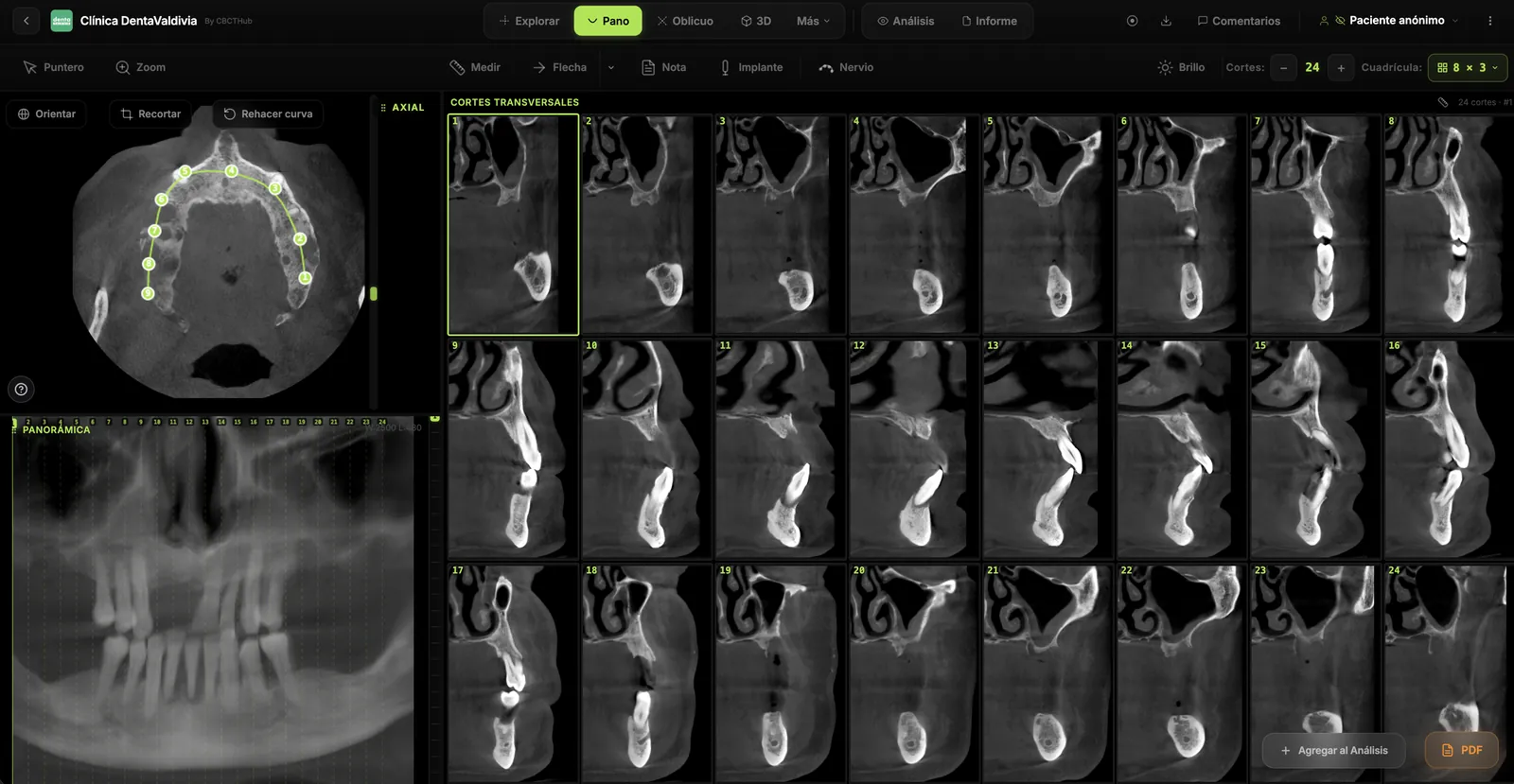
Browser DICOM viewer vs desktop: what works for CBCT in clinic
Open CBCT in the browser or install a desktop viewer? A clinical decision matrix: MPR performance, offline use, Mac/Windows mix, sharing without CDs, and when native software still wins.
How to open a CBCT without installing software: a practical online-viewer guide
You got a CD, ZIP, or link with a CBCT and no manufacturer viewer. How to open the DICOM in the browser, measure in mm, and what to do when it fails.
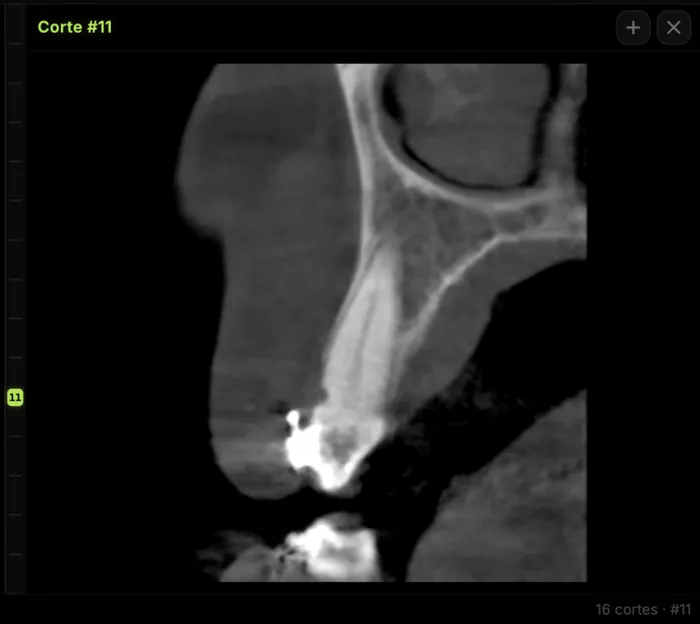
Mandibular canal and inferior alveolar nerve on CBCT: anatomy, variants, and pre-surgical measurement
Locate the mandibular canal and IAN on CBCT: mental loop, bifid/retromolar canal, measurement checklist, and when to escalate from panoramic (ALADA).