CBCT radiation dose: how to explain it to a patient in 30 seconds
· Updated
Almost every patient asks the same thing before a CBCT scan: "how much radiation is in that?". If you answer with jargon or microsieverts, you lose their attention. If you minimize, you lose their trust. The key is a short, honest, comparison-based script.
The number you need to memorize
Effective dose for a dental CBCT scan varies with field of view (FOV) and machine, but typical ranges are:
- Single-tooth CBCT (small FOV, 5x5 cm): 20 to 80 microsieverts.
- Full-arch CBCT (medium FOV, 8x8 cm): 60 to 200 microsieverts.
- Full maxillofacial CBCT (large FOV, 15x15 cm or more): 150 to 600 microsieverts.
For context: a digital panoramic is around 10-25 microsieverts and a medical head CT can exceed 2,000 microsieverts. The natural background radiation everyone receives just by being alive is around 3,000 microsieverts per year in the US.
The 30-second script
Memorize this version and adapt it to your machine:
"The scan we are doing today delivers about the same radiation as two weeks of normal daily life, or roughly one transatlantic flight. It is dramatically less than a traditional medical CT and it lets us see your bone and nerves in 3D so we can plan your treatment safely. You will hold still for 20 seconds and we are done."
That covers the three things the patient wants to know: how much, compared to what, and what for.
Mistakes that destroy trust
- "It is nothing, do not worry": sounds defensive and dismissive.
- "It is 80 microsieverts": the patient has no context for that number.
- "You already had a pano, this is fine": stacking dose without asking is an ethics issue.
When the patient pushes for data
If the patient is an engineer, a pediatrician or simply well informed, do not improvise. Print a comparison table and hand it over. Useful anchors:
- Transatlantic flight: about 50 microsieverts of cosmic radiation.
- Natural background: about 8-10 microsieverts per day.
- Bilateral mammogram: about 400 microsieverts.
- Annual occupational limit (medical staff): 20,000 microsieverts.
What about children?
In pediatrics the ALARA principle (As Low As Reasonably Achievable) is mandatory. Reduce FOV to the minimum needed, lower kV and mA if your machine allows, and document the clinical justification. Never order a pediatric CBCT scan "just in case".
How CBCTHub helps
In the report you send to the patient or referring dentist you can automatically include the scan dose, FOV and a comparison to everyday exposures. That projects professionalism and cuts repeat questions. If you want to see an example, you can create a free account and upload a test case.
Wrap up
CBCT radiation is a topic where honesty wins. Memorize the 30-second script, keep concrete numbers handy and never downplay. A well-informed patient comes back and refers; a half-reassured patient walks out with doubts.
Try CBCTHub for free
Upload, view, and share DICOM scans in the cloud. Nothing to install.
Create free accountRelated articles
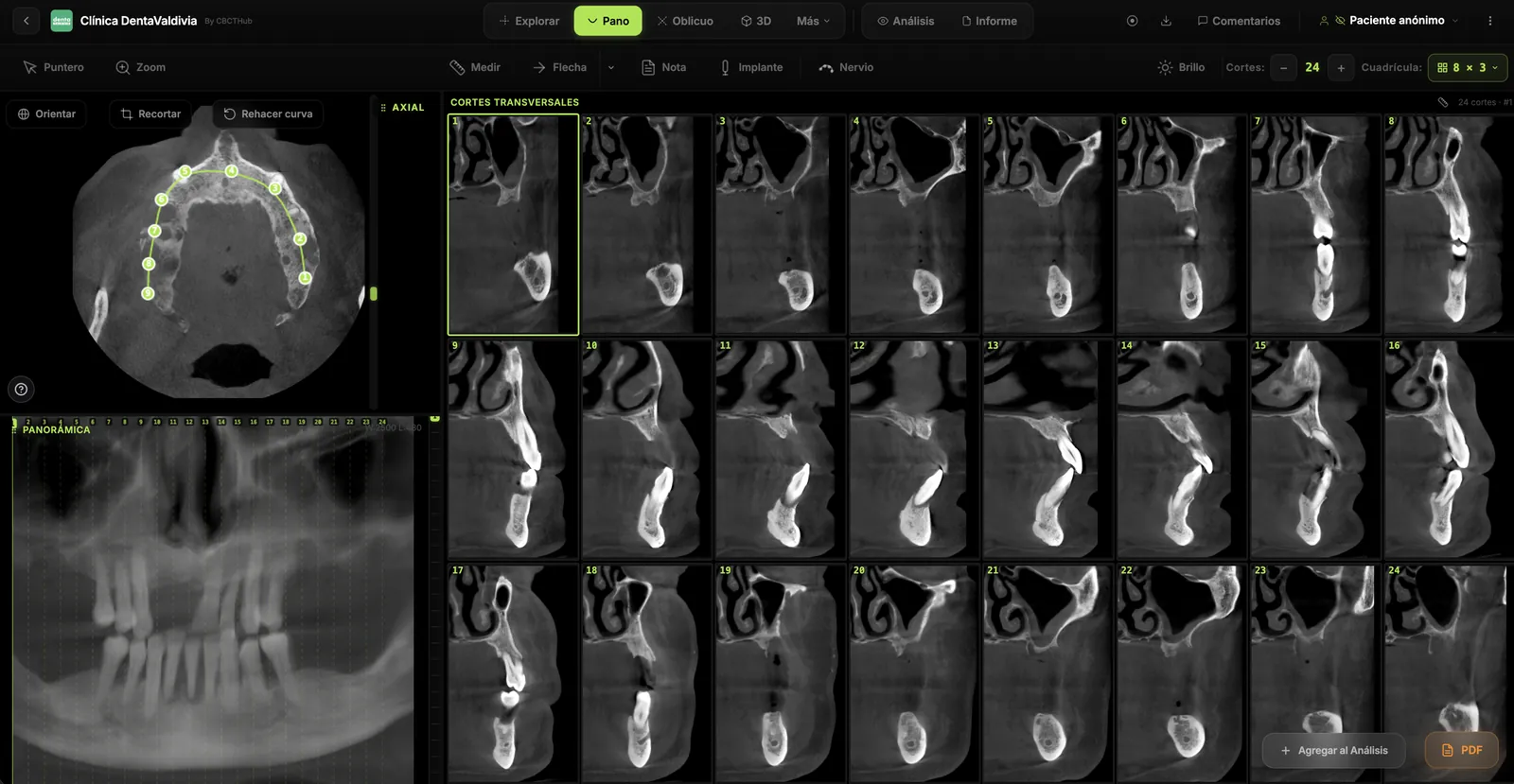
Browser DICOM viewer vs desktop: what works for CBCT in clinic
Open CBCT in the browser or install a desktop viewer? A clinical decision matrix: MPR performance, offline use, Mac/Windows mix, sharing without CDs, and when native software still wins.
How to open a CBCT without installing software: a practical online-viewer guide
You got a CD, ZIP, or link with a CBCT and no manufacturer viewer. How to open the DICOM in the browser, measure in mm, and what to do when it fails.
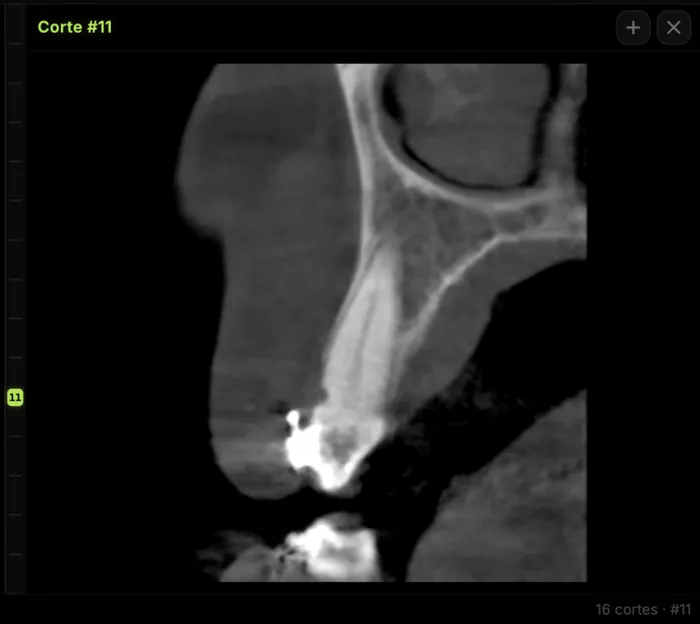
Mandibular canal and inferior alveolar nerve on CBCT: anatomy, variants, and pre-surgical measurement
Locate the mandibular canal and IAN on CBCT: mental loop, bifid/retromolar canal, measurement checklist, and when to escalate from panoramic (ALADA).