How to Choose the Right CBCT Viewer for Your Clinic

· Updated

The Importance of Selecting the Right Viewer
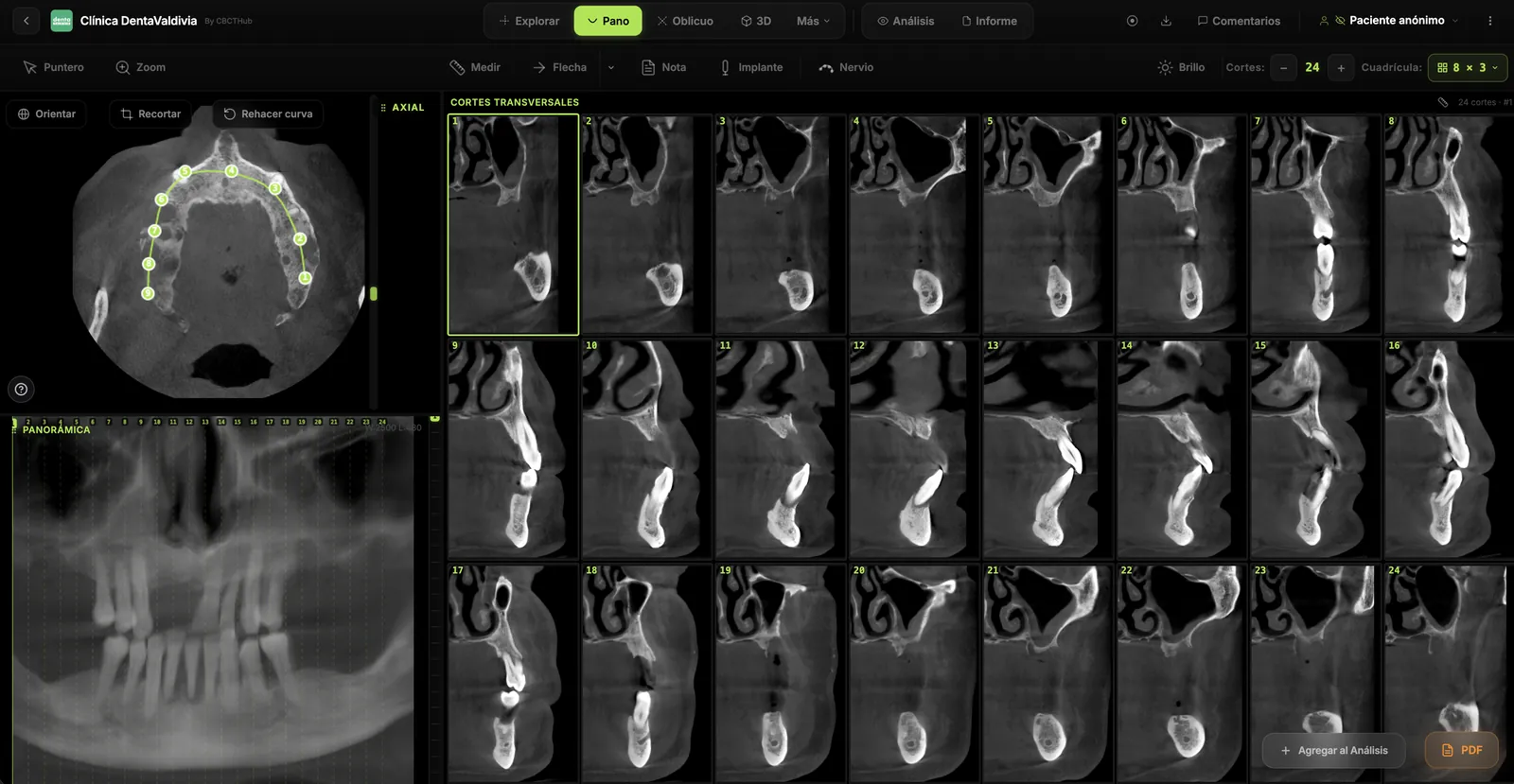
The CBCT viewer you select significantly impacts your daily clinical workflow, diagnostic capabilities, and operational efficiency. Choosing the right dental imaging software requires careful evaluation of functionality, ease of use, reliability, and compliance features.
Core Functionality Requirements
Any professional CBCT viewer must provide essential viewing capabilities:
- Multiplanar Reconstruction: Simultaneous display of axial, sagittal, and coronal views with synchronized navigation.
- Window/Level Adjustment: Interactive control of contrast and brightness to optimize visualization of different tissue types.
- Measurement Tools: Accurate distance and angle measurements essential for implant planning and surgical procedures.
- 3D Rendering: Volume rendering and surface shading for anatomical visualization and patient education.
- Image Quality: Consistency of image rendering across different computers and displays.
Specialized Clinical Features
Depending on your clinical focus, consider specialized functionality:
For Implant Planning: Look for dedicated implant planning modules with surgical guide generation, bone density analysis, and virtual implant positioning capabilities.
For Orthodontics: Cephalometric measurement tools, skeletal analysis, and superimposition capabilities for treatment planning.
For Oral Surgery: Advanced segmentation, airway analysis, and 3D printing support for surgical simulation.
Workflow and Integration Considerations
Evaluate how seamlessly the viewer integrates with your existing systems:
- PACS Integration: Ability to retrieve images from your picture archiving system automatically.
- Practice Management Software: Direct linking from patient records to imaging studies.
- Export Capabilities: Support for DICOM export, PDF reports, and various image formats.
- Multi-modality Support: Viewing of panoramic, intraoral, or other imaging modalities alongside CBCT.
Ease of Use and Learning Curve
Software that requires extensive training limits clinical adoption. Evaluate:
- Intuitiveness of the interface
- Availability of training resources and tutorials
- Quality of customer support
- Frequency of updates and feature improvements
- Consistency with industry-standard viewer paradigms
Deployment Options: Desktop vs. Cloud-Based
Desktop Applications: Installed locally, offering advanced processing capabilities and offline access. Suitable for heavy daily use and advanced post-processing.
Cloud-Based/Online Viewers: Accessible from any device with a browser. Ideal for quick consultations, sharing, and multi-location access without installation burden.
Many practices benefit from using both—desktop software for detailed analysis and a cloud-based platform like CBCTHub for accessibility and sharing.
Security and Compliance
Healthcare imaging requires robust security:
- HIPAA compliance certification
- GDPR compliance (if operating in Europe)
- Encryption of data in transit and at rest
- Role-based access controls
- Comprehensive audit logging
- Regular security testing and certifications
Cost Considerations
Pricing models vary significantly:
- Perpetual Licenses: High upfront cost with maintenance fees.
- Subscription Models: Monthly or annual fees with included updates and support.
- Per-Study Licensing: Pay-as-you-use model for lower-volume practices.
Calculate total cost of ownership including licenses, hardware, training, and support.
Vendor Support and Longevity
Choose vendors with strong financial stability and demonstrated commitment to ongoing development. Consider:
- Track record of regular updates
- Responsiveness of customer support
- Community user forums and peer support
- Roadmap for future features
Trial and Evaluation
Before committing, request a trial period. Test the software with your actual CBCT datasets, involve key clinical team members, and assess real-world usability. Many reputable vendors offer free trials or limited-time licenses.
Conclusion
Selecting the right CBCT viewer is an investment in your clinical capabilities and efficiency. Thoroughly evaluate functionality, workflow integration, ease of use, security, and cost. Involve your clinical team in the selection process to ensure the chosen software truly meets your practice's needs.
Try CBCTHub for free
Upload, view, and share DICOM scans in the cloud. Nothing to install.
Create free accountRelated articles
Text, Email, or Link: A Real Comparison of 4 Ways to Deliver a CBCT Scan
CD/USB, text message with file, email attachment, and platform link. Cost, security, experience, and scalability of each.
Endodontic CBCT: AAE/AAOMR 2025 indications
When to justify CBCT in endodontics per the AAE/AAOMR 2025 Position Statement: selective use, limited FOV, ALADAIP, and a practical reading checklist.
Dental CBCT in the cloud: day-to-day storage and sharing in clinic
What “CBCT in the cloud” means in clinic: store the original DICOM, access it from multiple chairs, and share with access control — without mistaking it for a full PACS or a WhatsApp ZIP.