Best Dental CBCT Scanners in 2026: Complete Comparison Guide

How to Choose the Right CBCT Scanner
Investing in a CBCT scanner is one of the biggest decisions a dental practice can make. With prices ranging from $40,000 to over $200,000, choosing the right unit requires careful evaluation of your clinical needs, patient volume, physical space, and budget. This guide compares the leading CBCT scanners available in 2026.
Key Factors in CBCT Scanner Selection
Before comparing specific models, understand the specifications that matter most:
- Field of view (FOV): Determines how much anatomy is captured. Small FOV (5×5 cm) is ideal for endodontics and single implant sites. Medium FOV (8×8 to 10×10 cm) covers single arch. Large FOV (16×13 cm+) captures both jaws, TMJs, and airway — essential for orthodontics and full-mouth rehabilitation.
- Voxel size: Determines resolution. Smaller voxels (0.075-0.1 mm) mean higher resolution but larger file sizes. Most clinical applications are well-served by 0.125-0.2 mm voxels.
- Effective dose: Measured in microsieverts (μSv). Varies significantly by FOV, protocol, and manufacturer. Lower is better, but must be balanced against image quality.
- Scan time: Shorter scans (under 15 seconds) reduce motion artifacts, especially important for pediatric and anxious patients.
- Multi-modality: Many units combine panoramic, cephalometric, and CBCT in one device, saving space and cost.
Scanner Comparison by Manufacturer
Planmeca ProMax 3D
The Planmeca ProMax 3D series is known for versatile FOV options (from 5×5 to 26×26 cm), excellent image quality, and the powerful Romexis software platform. The mid-range and high models offer patient motion correction (CALM algorithm), which reduces motion artifacts without rescanning. Multiple FOV sizes in one unit make it adaptable from endodontics to full craniofacial imaging. Strong integration with third-party implant planning software via seamless DICOM export.
Dentsply Sirona Orthophos / Axeos
The Orthophos S and SL are entry-to-mid-level units popular in general dental practices, while the Axeos is Sirona's premium large-FOV unit. Tight integration with Sidexis 4 software and the broader Sirona ecosystem (CEREC, Primescan) makes these ideal for practices already using Sirona products. The Orthophos SL 3D offers an 8×8 cm FOV with fast scan times, suitable for implant planning and basic 3D diagnosis.
Carestream CS 8200 3D / CS 9600
Carestream's CS 9600 is a premium all-in-one unit offering panoramic, cephalometric, CBCT, and even facial scanning. Its AI-powered metal artifact reduction and multiple FOV options (up to 17×13 cm) make it highly versatile. The CS 8200 3D is a more affordable option with a focused FOV range. Both export clean DICOM files compatible with any third-party viewer.
Vatech PaX-i3D / Green Series
Vatech offers competitive pricing with solid image quality. The PaX-i3D series provides multiple FOV options and the Green Smart and Green CT2 models are positioned as cost-effective entry points into CBCT imaging. Vatech's EzDent-i software is intuitive and exports standard DICOM. A popular choice for practices seeking CBCT capability without a premium price tag.
J. Morita Accuitomo / Veraview X800
The 3D Accuitomo is legendary for its high-resolution small-FOV imaging — with voxel sizes as small as 0.08 mm, it's the gold standard for endodontic and periapical imaging. The Veraview X800 offers a broader FOV range for general use. i-Dixel software is powerful but has a steeper learning curve. Morita units command a premium price but deliver outstanding image quality for detail-oriented clinicians.
NewTom VGi evo / GiANO HR
NewTom pioneered CBCT in dentistry. The VGi evo offers a flat-panel sensor, adaptive FOV, and automatic dose optimization (SafeBeam technology). The GiANO HR is a more compact option. NewTom is known for low-dose imaging — their automatic exposure adjustment minimizes radiation. Strong in European and Latin American markets.
KaVo OP 3D / OP 3D Pro
KaVo's OP 3D series integrates well with KaVo's ecosystem of instruments and software. The OP 3D Pro offers FOVs up to 16×13 cm and competitive image quality. The CliniView software is user-friendly. KaVo is a reliable choice for practices that value ecosystem integration.
Making Your Decision
No single scanner is "best" for every practice. Match the unit to your clinical focus: endodontists should prioritize high resolution and small FOV (consider Morita Accuitomo), orthodontists need large FOV (consider Planmeca or Carestream CS 9600), and general dentists may prefer a multi-modality unit that combines panoramic and CBCT (Sirona Orthophos SL, Vatech PaX-i3D, or KaVo OP 3D).
Regardless of which scanner you choose, CBCTHub is compatible with DICOM output from all major manufacturers — so you can share scans, collaborate with specialists, and deliver exams digitally no matter what hardware you use.
Try CBCTHub for free
Upload, view, and share DICOM scans in the cloud. Nothing to install.
Create free accountRelated articles
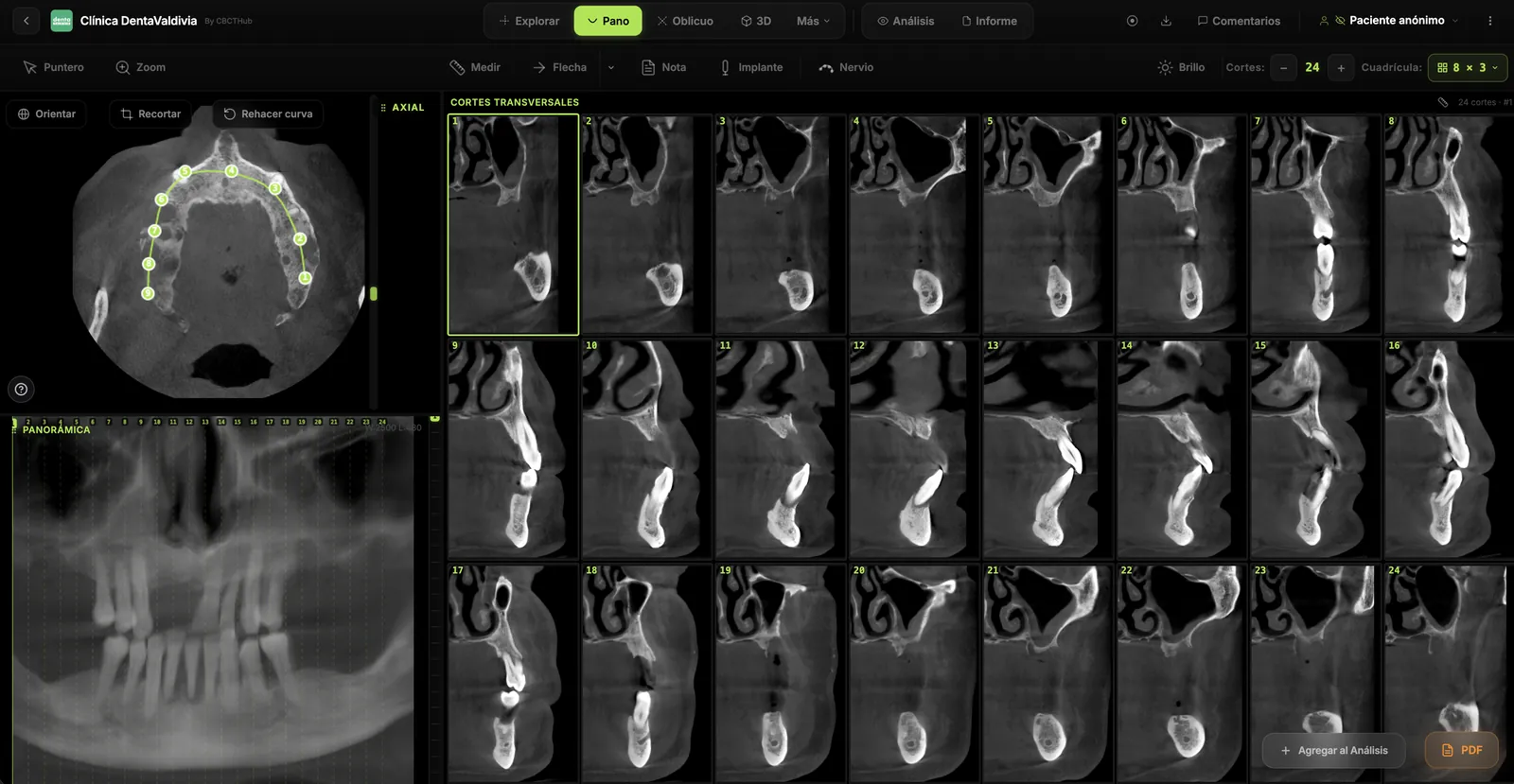
Dental CBCT in the cloud: day-to-day storage and sharing in clinic
What “CBCT in the cloud” means in clinic: store the original DICOM, access it from multiple chairs, and share with access control — without mistaking it for a full PACS or a WhatsApp ZIP.
Browser DICOM viewer vs desktop: what works for CBCT in clinic
Open CBCT in the browser or install a desktop viewer? A clinical decision matrix: MPR performance, offline use, Mac/Windows mix, sharing without CDs, and when native software still wins.
Dental DICOM software: a checklist for choosing a CBCT viewer
Before adopting a dental DICOM or CBCT viewer in the clinic: checklist for interoperability, MPR, mm measurements, share without CD, privacy, and TCO.